Showing posts with label Innerviews. Show all posts

March 15, 2026

Richard Barbieri: the Innerviews interview

Richard Barbieri
photo: Martin Bostock

Anil Prasad interviewed keyboardist Richard Barbieri for his Innerviews website about Japan, Porcupine Tree, his solo career and his latest album Hauntings:

I’m always searching for that little spark that lights the flame and leads the way. Since the COVID-19 pandemic, I’ve been a lot more introspective and thinking about things. Also, this has to do with my age and the kind of career I’ve had. I look back a lot and try to make sense of things, and I do tend to internalize.

I realized I was quite obsessed with this nostalgic feeling I had for things, and not just for things that happened, but for things that didn’t happen. They would get into my dreams as recurring events, places, and characters. It got me thinking about reality and how much of it is real.

January 08, 2026

Phil Manzanera: the Innerviews interview

photo: Suki Dhanda

Anil Prasad interviewed guitarist Phil Manzanera for his Innerviews website about Roxy Music, his solo career and the neverending quest for exploring new sounds:

I've got a constant desire to do new things and to see what is in this strange thing called the mind. It’s quite a complex piece of human equipment, which at nighttime goes berserk and takes you all over the place in the strangest possible way. And you wake up thinking, "What was that?"

One way of channeling that creatively is in doing music that doesn't rely on you writing it, but rather focusing on improvised music, and just seeing what comes out. And it's always been a bit like that for me in terms of my desire to just play and not think about it, and then see what happens.

» manzanera.com

November 01, 2025

Colin Blunstone: the Innerviews interview

photo: Andre Eccles

Anil Prasad interviewed singer Colin Blunstone about the mono reissue of The Zombies classic Odessey and Oracle, still being able to hit the high notes at 80, and the longevity of The Zombies for his Innerviews website. About the reissue:

This is how it was mixed when we first recorded it. And I think it has got something special to it. It certainly seems more to the point with me, and crisper and warmer. I just think it's fantastic.

There's been interest in going back to the original tapes and remastering this record as we heard it way back. We first started recording this in 1967 and it wasn’t released until 1968. I think it's wonderful that there's the interest and commitment from people that want to go back and do this.

March 07, 2025

Steven Wilson: the Innerviews interview

photo: Joel del Tufo

Anil Prasad interviewed Steven Wilson about his new album The Overview for his Innerviews website. About creating the two long-form compositions:

I wouldn’t say it was easy, but it was easier. The first side of the album is 70-percent derived from a single 19-note sequence and bassline that goes with it. So, you’ll hear the same musical material interpreted like a classical form, along the lines of what Wagner would have called a leitmotif or what Stockhausen would have called a formula. It’s the idea of variations on a theme. So, you’re not having to reinvent the wheel with every piece of music you write. Essentially, you’ve established the harmonies and melodies you’re going to use, and now it’s a question of how many ways can you approach them. That’s what Mike Oldfield was very good at. He’d have two or three melodies that he’d explore in any number of different ways.

So, that was a little bit easier, because I wasn’t starting with a blank page every time I was going to write a piece of music. It was more a question of “Where does this movie or novel go next? I’ve established my characters and the scenario. Now, what’s going to happen to those characters?”

January 02, 2025

Innerviews on YouTube

Music journalist Anil Prasad has started a channel on YouTube with highlights from his Innerviews interviews and documentaries.

» innerviews.org

November 25, 2024

Randy McStine: the Innerviews interview

photo: Hajo Müller

Anil Prasad has an in-depth interview with singer and multi-instrumentalist Randy McStine for his Innerviews website. About his new solo album Mutual Hallucinations:

The album title refers to the idea that we’re sharing a space in which algorithms and politics intersect and divide us into hyper-individualistic perceptions of the world. We’re all walking around with a different take on what the world even is, much less what’s happening in it. It’s a hallucination of sorts. What I think happens these days is we try to form a sense of everything that’s going on, and mostly converse with people who land on the same side of a particular issue. These are the people we band together with. But it’s all happening within a vortex of information and disinformation. The distinction becomes “my truth” and “your truth.” So, Mutual Hallucinations is about how society has crossed the point to arrive where we’re together and completely apart, simultaneously. It’s also about the things we’re ignoring at our own peril.

October 26, 2023

Steven Wilson: the Innerviews interview

photo: Hajo Müller

Innerviews has another in-depth interview with Steven Wilson. About his new album The Harmony Codex and the concept of the never-ending staircase:

The album shares its title with a short story that was in my book released last year, A Limited Edition of One. The central conceit of that story is the idea that a brother and sister enter a building, a terrorist attack and explosion occur, and they can't exit the building. So, they're forced to go up the staircase. They get on it and it essentially becomes the M.C. Escher Penrose stairs of never-ending ascent. So, the story takes a turn from something based in reality to something based in surrealism with a very dreamlike quality. And I'm not going to say it was something I planned, but the more I thought about it, the more I realized that this metaphor of a never-ending staircase applies particularly to people in my age category. When you get to your fifties, you start to appreciate certain things about the passage of life.

One of those things I think you appreciate as you get older is that life is about the journey. It's not about the destination. It's not about arrival. It's about all of the things you encounter on the way. And very often a lot of the most significant things in life are the things you didn't plan or expect.

January 23, 2023

Colin Edwin: the Innerviews interview

photo: Alistair Peck

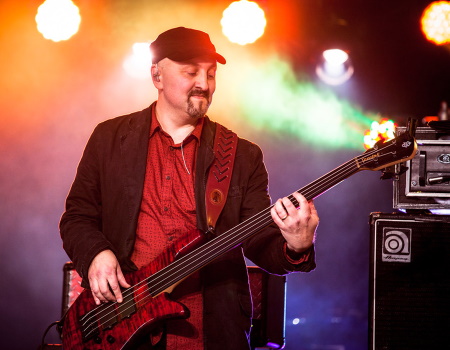
Innerviews has an in-depth interview with bass player Colin Edwin, best known for his work with Porcupine Tree (1993-2011), but also a member of experimental acts like Ex-Wise Heads, Metallic Taste of Blood, and currently busy with O.R.k. He is a sonic explorer, always finding new ways to supply far more than just a bottom end - check out his Hebdomadal collection to get an idea of his out-of-the-box approach.

Edwin is an avid collaborator who reached out on the internet to make music together, and keep himself busy (and sane):

I really missed interacting with musicians on a physical level, but I was able to work in my own space and collaborate with people online. God knows what the pandemic would have been like without the Internet. It would have been impossible. We would have all gone mad. So, the pandemic reaffirmed the value of live interaction. Live performance is what drew me to music in the first place. There’s a sort of magic there.

Throughout the pandemic, I was grateful I could continue collaborating with people online. We got the O.R.k. album done while were stuck in all sorts of places. It was the only thing I had to look forward to, without any gigs or trips planned.

July 13, 2022

Adrian Belew: the Innerviews interview

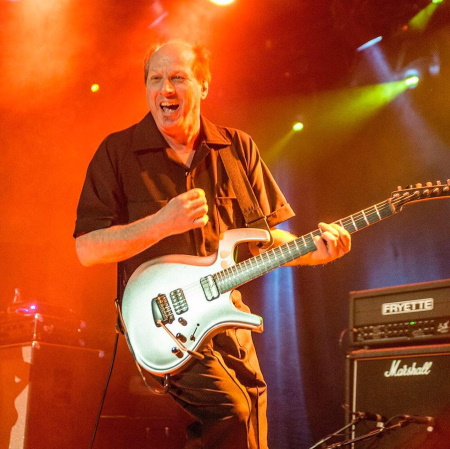
Innerviews has an in-depth interview with guitarist Adrian Belew, who played with Frank Zappa, David Bowie, Ryuichi Sakamoto, King Crimson and Talking Heads, developed apps to create generative music, and created an impressive discography as a solo artist. Anil Prasad spoke with him quite a couple times between 2019 and 2022. This piece uses parts from all of those.

On recording his new album Elevator:

It’s my 25th solo album and I really wanted to celebrate that milestone. Elevator was mostly written during the COVID-19 period and also while other factors were affecting in the world. During the last few years, there have been riots and a lot of anger and hate. People were turning against each other. And I really felt it was important to make a record that would be uplifting and give them a break from that. That’s why I called it Elevator. I was thinking about how music elevates people. So, I set about trying to make a record that would do that. I thought, "These are the best things I can offer to the world at this point, coming out of such big, giant disasters as we've all been through.

June 22, 2022

Porcupine Tree: the Innerviews interview

Porcupine Tree @ AIR Studios, London
Porcupine Tree @ AIR Studios, London - photo: Adam Taylor

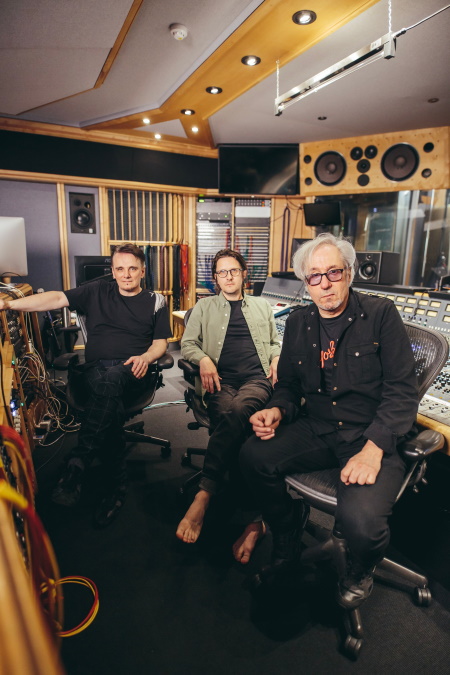
Innerviews has an in-depth interview with all three members of Porcupine Tree. Anil Prasad always gets to the bottom of things in his long-form pieces.

Steven Wilson about the band getting back together:

The first thing I want to point out here is that the band never officially dissolved. There was never any statement to the effect of, “The band no longer exists." Now, I say that with the caveat that obviously in interviews, I did try to get people to concentrate more on what I was doing at that moment, by being very dismissive about the band.

The material we are releasing on this new record goes as far back as 2012, which is when “Chimera’s Wreck” was written. So, there is a sense of continuity from the previous record, The Incident, which was released in 2009. We were writing material within three years of that album for a potential follow-up.

Obviously, that follow-up record has only just now come to fruition, but we were, on and off, working on this record for close to 10 years. So, in our minds, in our own little bubble, we had never stopped, but of course, to the outside world, it looked like the band had essentially ceased to function, when in fact it hadn't.

April 25, 2021

Leo Kottke: the Innerviews interview

Leo Kottke
photo: Amy Kerwin

Innerviews has an in-depth interview with guitarist Leo Kottke. About his writing process:

There's the tune and then there's the writing that has been going on in my head since I first made up an E chord. Immediately, I was doing what I'm doing now. In the beginning, I was just trying to make sounds. That's all I'm still really doing now, but I've learned a lot. This arc continues and I fill it out more. I have a bigger appetite. My curiosity keeps growing as well, as does my technique and execution. Curiosity is the engine for just about everything with me. Someone who's like Donald Trump is out of luck on that front.

Since I was 11, I recapitulate every time a tune starts showing up. It would show up as a figure, progression or a verse. It could also be as simple as hitting early on the overtones and fretting afterwards. Michael Hedges told me what got him going was when he heard me doing that. But what he did was a universe away from that.

January 26, 2021

Steven Wilson: the Innerviews interview

Steven Wilson
photo: Miles Skarin

Innerviews has an in-depth interview with Steven Wilson. About his new album The Future Bites:

The new album is quite accidentally very topical in how it explores consumerism and chaos, and the way things are marketed at us. I’m not just speaking in consumer terms, but the way the news is marketed at us, too. News and marketing aren’t words that should appear in the same sentence. And yet, realistically speaking, that's exactly what news is these days. It seems to be largely marketing. The whole phenomena of fake news and marketing, the way the media manipulate things, and the way social media distorts information and news is fascinating to me. It certainly means life doesn't get boring.

August 17, 2020

Steve Morse: the Innerviews interview

photo: DiMarzio

Innerviews has an in-depth interview with Steve Morse, Deep Purple's longest serving lead guitarist, who made a name for himself in the jazz-rock niche as a member of the Dixie Dregs. On recording that band's first album, The Great Spectacular in 1976:

The preparation for that album is the part I liked best. We were together as an ensemble and playing—usually for free—somewhere on campus at the University of Miami or around the city of Miami. The recording itself was stark and unpolished. We had to record it in one night after a long day of school and classes. It was done late at night. We were 19-20 years-old. It wasn’t really a studio. They just put the recording equipment in a live concert hall. We were set up in there with headphones. My amp was in an elevator shaft. The violin, Fender Rhodes and bass went direct. The drums were on stage. It was bizarre. We had to trudge upstairs to the very back where the projectionist would be in the movie theater and do the mix there. So, there was nothing great about the sound. But the preparation was the magic. The songs were in a good place because we had come together as a band.

» stevemorse.com

June 28, 2020

Jah Wobble: the Innerviews interview

photo: John Hollingsworth

Innerviews has an in-depth interview with bass maestro Jah Wobble. On recording the Full Circle album with Can members Holger Czukay and Jaki Liebezeit in 1982:

I remember Holger would say “Play first, talk later.” If Jaki ever said something about the music, it was “Play first, think later.” Jaki was a master musician and an incredible person. He had a certain power and concentration in every beat. Every beat was focused. When I play with drummers now, some of them think they’re better than they really are. They’ll be in time, but there’s a subconscious element to their playing that isn’t good. The whole thing should be an emanation of consciousness—you should be very conscious of what you’re doing. You should be very mindful of every beat. Jaki really had that. He was the engine room. He built things up. He wasn’t afraid to build things up very slowly, like the way an Indian musician would approach an afternoon raga. He had that control. He also had that triplet thing going on in the way African players do. He was a very weird guy and very deep. I used to call him “Rain Man.” He had this perfectionist streak about numbers and beats. He had a theory of beats that held up. It wasn’t some bullshit thing.

» jahwobble.com

February 25, 2020

Stephen W Tayler: the Innerviews interview

Few people can hand over a resume as great that is as awe-inspiring as this man: producer, mixer, engineer, composer, and visual artist Stephen W Tayler sat down with Anil Prasad for in-depth Innerviews interview (20000 words!). He has an key factor in getting the sound right for artists such as Kate Bush, Peter Gabriel, Genesis, Gong, Jethro Tull, Rush, and Tina Turner.

July 14, 2019

Jakko Jakszyk: the Innerviews interview

Innerviews has an in-depth interview with King Crimson frontman Jakko Jakszyk:

When I first was asked to join the group, it was a culmination of all sorts of things musically and ambition-wise. It was difficult not to acknowledge the 13-year-old boy in me who'd seen the band at Watford Town Hall back in 1971. In the ‘80s, I looked back somewhat cynically at that moment and thought of it as a kind of rather over-romanticized ideal that I'd witnessed this group and experienced some magic that had somehow changed my life. Then I got to the age I am now and you know what? It really did change my life and here I am in the midst of that music. That music that made me want to become a professional musician in the first place. It was difficult to escape the shadow of that experience when I first joined King Crimson. It was also difficult to escape the shadow of the enormity of the task I had decided to take on. I remember Robert saying to me at one point, "Be careful what you wish for."

» Jakko Jakszyk on Wikipedia

August 26, 2017

Steven Wilson: the Innerviews interview

photo: Hajo Mueller

Innerviews has an in-depth interview with Steven Wilson. About going more pop on his new album To The Bone:

There were two fundamental things. The first is the need for me to do something new. The least appealing thing to me is the idea of repeating myself. That’s a different stance to take than most artists who tend to make something that works for their audience. They tend to want to repeat the formula and give the fans what they want. It has always been my contention that the really great artists like Miles Davis, Frank Zappa, Neil Young, Peter Gabriel, and Kate Bush confronted audience expectations. They all had a need to evolve, change and keep things interesting for themselves. There was never a possibility that I would continue simply making more of the same music.

August 26, 2016

Bryan Beller: the Innerviews interview

Innerviews has an in-depth interview with Bryan Beller, The Aristocrats' bass player. He discusses his thoughts on being an independent artist and band manager of sorts, life on the road as a Joe Satriani sidemen, his friendship with Mike Keneally, and how to make ends meet as a working musician.

He plays down his capabilities as a bass player:

The big joke of my career is that I’ve been thrust into this world in which everyone is a hot-shot player. I’m not. There are so many bass players that can play complete circles around me, technically. I’m really a meat-and-potatoes bass player. I never worked on technique when I was a kid. I only worked on learning songs. If I couldn’t learn the song because there was a technique I couldn’t play, then I would figure out a way to do it. But I never sat and practiced scales with a metronome. I never practiced right-hand technique. I only practice for gigs, recordings and making sounds. I’ll sit in rehearsal rooms with my pedal board and tweak forever until I get something I know will work live.

July 06, 2015

Matt Stevens: the Innerviews interview

An in-depth interview by music journalist Anil Prasad with guitarist Matt Stevens on the Innerviews website. About how he got started as a solo artist with his acoustic and a loop pedal:

I started off very metal then I got into Mahavishnu Orchestra, King Crimson, Hüsker Dü, Bad Brains, The Smiths, Radiohead and Television via the KLF and Portishead. Somewhere in there I also got into Miles Davis and Joe Pass. It’s all had an impact. Having guitar lessons from someone who was very into unusual chords was really useful. If you’re playing anything other than the root note at the bottom of a chord, it’s already different to 99 percent of what most bands are doing. My tutor, Richard Beaumont, had me playing “Dance of Maya” by Mahavishnu Orchestra when most kids were learning “Sweet Child O’ Mine.” After that I spent most of my 20s playing in various London indie rock and metal bands. About 10 years ago, the band I was in split up and I was left with an acoustic guitar and a loop pedal and no transport, so solo guitar loop music seemed like a good plan. I could travel on the tube in London and do gigs. It was a practical solution. I was really into layered guitar like Johnny Marr and I wanted to combine that with the Mahavishnu-type chord progressions. No band I played with wanted to do that, so I thought I’d just do it myself.